
References should come later
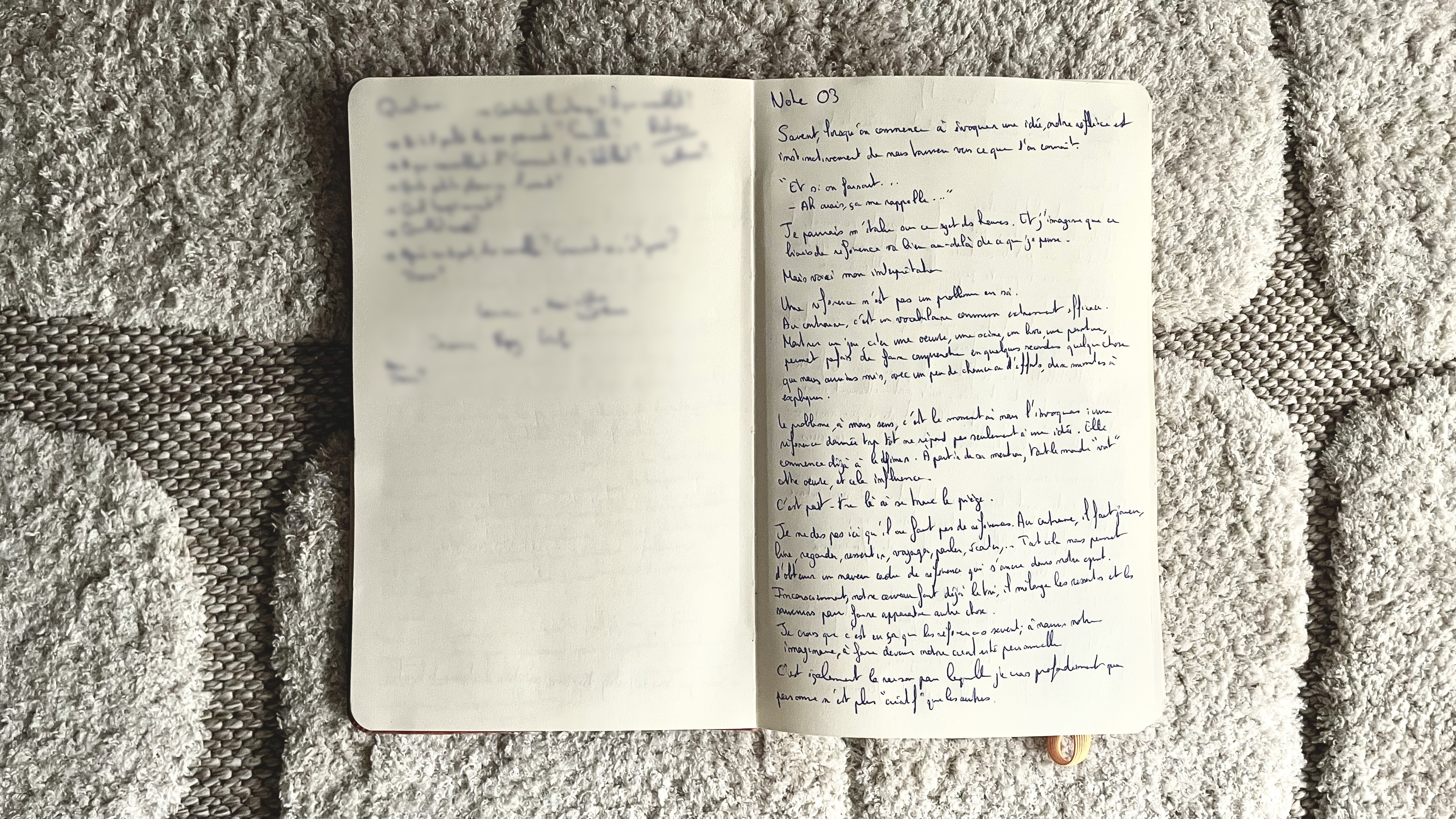
This subject is fairly dense, and it took me some time to lay it out clearly. It may feel messy to you, or even "too much". But I think it is crucial to talk about it, and to step outside our comfort zone in order to become more creatively free.
Often, when we start discussing an idea, our instinctive reflex is to turn toward what we already know.
“What if we did...”
- Oh yeah, that reminds me of...”
I could go on about this subject for hours, and I imagine this reference bias goes far beyond what I currently understand.
But here is my interpretation, as of today.
A reference is not a problem in itself, quite the opposite. It is an extremely effective shared vocabulary. Showing an image, citing a game, a work, a book, or a painting can sometimes make people understand in a few seconds something we might otherwise spend, with a bit of luck or effort, ten minutes trying to explain and make clear.
The problem, in my opinion, is the moment when we invoke it. A reference introduced too early does not simply respond to an idea. It already begins to define it. And from that point on, everyone “sees” that work. Even when we try to move away from it, its influence on our imagination is already there.
That may be where the trap lies.
Yes, we need to play, read, watch, feel, travel, talk, listen... All of this allows us to accumulate material that settles into our minds.
Unconsciously, our brain is already sorting through it. It blends feelings and memories to make something else emerge.
I think this is what references are primarily for. They feed our imagination, then gradually stop being identifiable references and become influences.
So here it is: that material is our influences. We should let those references become influences, allowing us to perceive things that only we can see through our own personal mix.
Then the brainstorming begins. We should not need to cite a reference for an idea to exist or to be heard.
And once divergence is over comes convergence, where references can become useful again to communicate, compare, and formalize the idea, the concept, the image.
I could also go on about why I deeply believe that no one is born intrinsically more “creative” than anyone else. I am actually wary of that expression: “the creatives”.
As if some people had been given, at birth, the right, or even the gift, to imagine.
Bullshit.
In a brainstorming session, everyone makes choices. Well, our brain is already making them for us long before we ever propose the idea. But as soon as a choice carries something personal, it already contains a part of creativity. It allows us to respond to a problem, whatever its nature, in a surprising, personal, and sometimes unprecedented way.
The difference may simply be that some people feel freer to follow their choices. But that freedom, besides depending on many other factors, also naturally comes from how comfortable we are with the subject. It comes from what we have seen, understood, tried, and felt. It comes from our accumulation of influences.
So yes, let us feed ourselves with references. The idea is not to build a library of references just to look clever in society. No, it is about giving our brain something to chew on.
Let us develop our influences, multiply them, diversify them, and then perhaps we will become more comfortable proposing ideas that are entirely personal to us, ideas that truly belong to us.
We should cultivate our influences.